

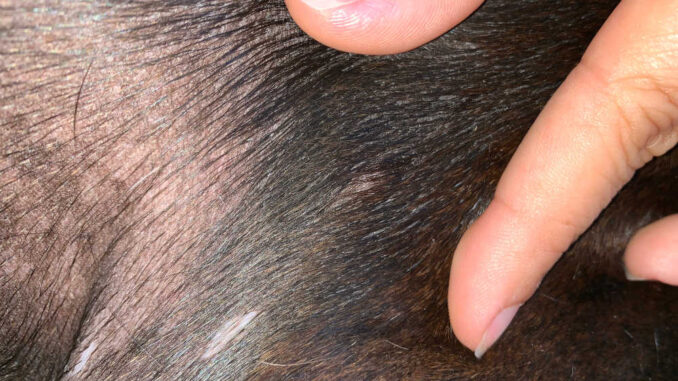
When a dog has several small bumps on their skin, it’s a common reason for pet parents to feel concerned. As a veterinarian, evaluating these bumps is a routine part of my job, and in most cases I’m able to reassure owners that they’re nothing to worry about. However, because some skin bumps can be more serious—including cancerous—we always want to take a closer look at any new or changing lumps. In this article, I’ll share real examples and photos of dogs with multiple small bumps and explain the most likely causes.
Top reasons causing several small bumps on a dog’s skin
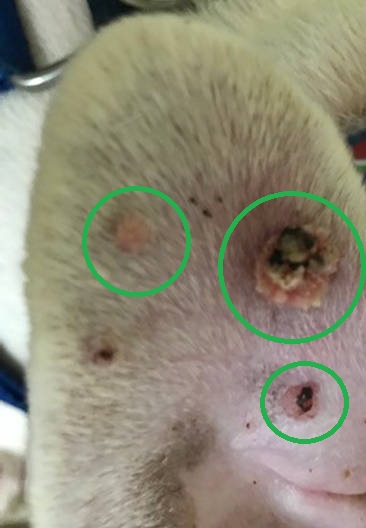
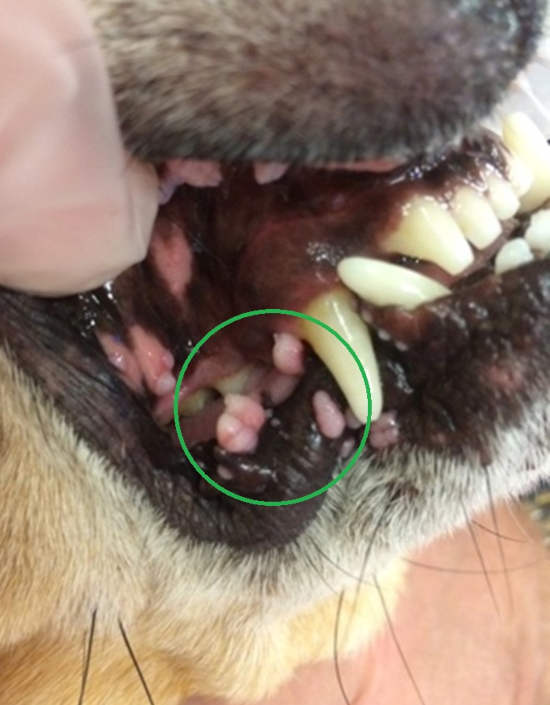
1. Warts: It’s very common for affected dogs to have multiple warts
Dog warts typically appear as small, raised, cauliflower-like growths on the skin or in the mouth, and it’s very common for affected dogs to have multiple warts at the same time rather than just one.
Viral warts are frequently picked up by younger dogs, especially those who spend lots of time socializing, often causing multiple lumps or bumps. We also see warts and skin tags in older dogs, whose immune systems are less robust and allow for these growths to proliferate. Warts tend to appear fleshy and are loosely attached to skin.
Viral warts usually go away within a few months, while older dog warts tend to remain unchanged and cause no harm. Vets may remove a wart if it is causing issues, such as bleeding or infection. This is a straightforward surgery. See pictures below or view our pictures of dog warts.
2. Multiple bumps due to allergies often appear in clusters.
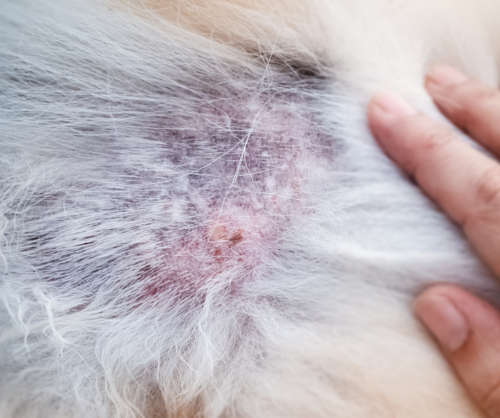
Allergies are fairly common in dogs, and I see them very frequently in my practice. These bumps are usually small, red, and itchy, often showing up as multiple bumps rather than a single lesion.
Allergies often cause itchy red bumps on the skin, along with watery or itchy eyes and excessive scratching or licking. These allergy-related bumps tend to appear most often in areas with lighter or thinner hair, such as the belly, groin, armpits, and around the face and paws. While allergies are usually not dangerous, ongoing itching can lead to skin infections, so it’s important to address the underlying cause and keep your dog comfortable. View pictures of allergy bumps (with vet advice).

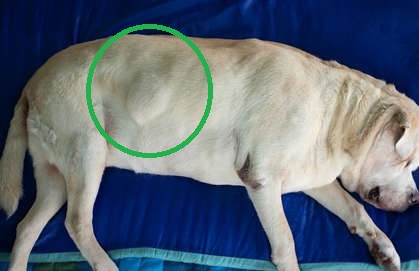
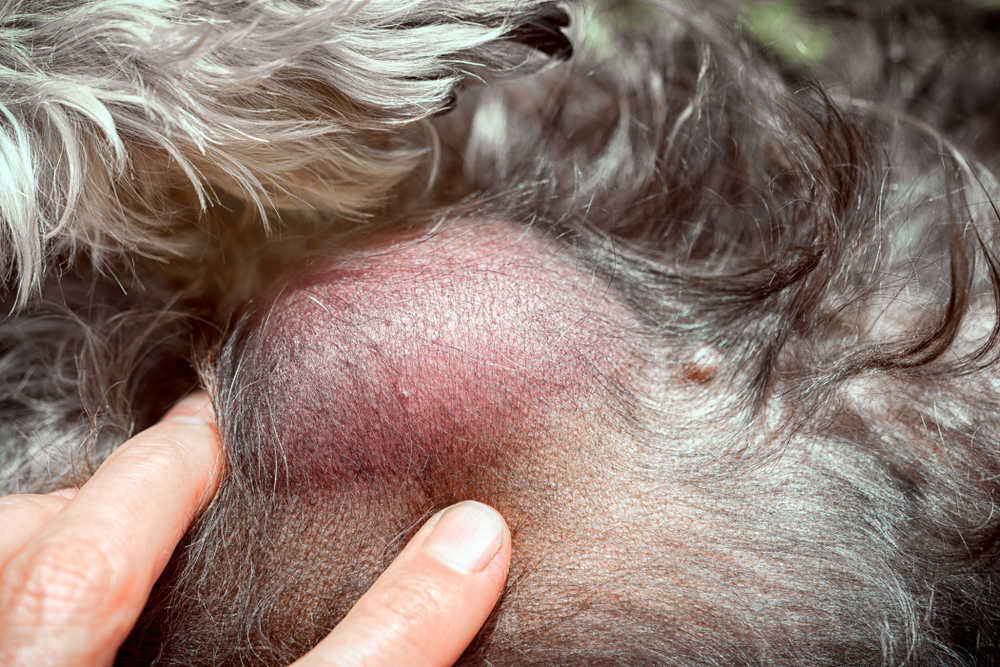
3. Lipomas (fatty masses): many dogs develop more than one lipoma as they age.
Lipomas are incredibly common, especially in older dogs who are over-weight. Once a dog develops one, they tend to get more as they age. These growths feel soft and squishy, are freely movable under the skin and grow slowly.
We will often sample a lipoma using a needle (FNA), to confirm it is nothing more sinister. While most fatty lumps are left alone, those that are very large or affecting mobility are sometimes removed surgically.
4. Ticks: dogs exposed to ticks often have multiple ticks in different areas of the body
If your dog walks through long grass or spends lots of time out in a field, they may return home with little ticks on them. These critters attach to the outside of the skin and have a shiny, smooth appearance. On closer examination, we should be able to see their spindly legs.
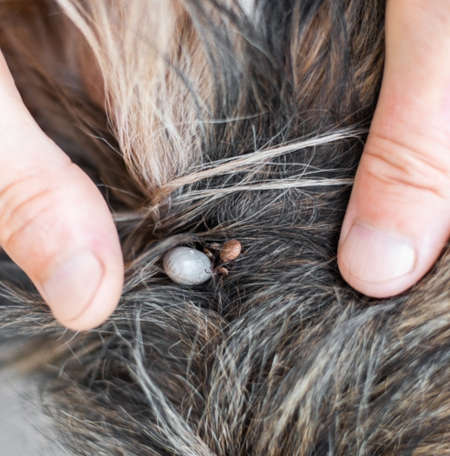
We must remove any tick we see ASAP with a tweezers or tick remover, by twisting them. The dog’s skin can then be cleaned with salt water. You should also get our dog up to date with their tick prevention. A vet visit is advised if you cannot remove all of the ticks, you think a tick part remains in the dog or your dog seems poorly in the weeks after their tick infestation.
5. Scabs: commonly occur in multiple spots, especially in dogs with allergies, infections, or frequent scratching.
Scabs feel like hard, crusty lesions that are under the fur. Crusty scabs may result in several lumps appearing on the skin. Scabs have a range of causes including skin allergies, bacterial infections and fleas. Many dogs with scabs will be itchy and may lick or chew at their skin.
Most scabs are easily treated and resolve promptly, once we address the underlying cause. This may mean providing things like issuing flea medicine, steroids or antibiotics, as well as the use of medicated washes and skin supplements. When scabs occur but you’re not sure why, book in with your vet, so they can get to the bottom of it.
6. Nipples
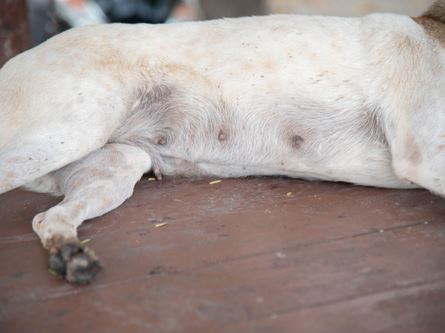
This may seem like a funny topic to include, but I often encounter owners who have found their dog’s nipples and are concerned there is something wrong. Some owners are surprised to discover that male dogs have nipples too. Dogs usually have between 8 to 10 nipples on their belly, and they are raised, fleshy and quite symmetrical. They are nothing to worry about, but it is worth recognizing what they are.
7. Tumors: while some dogs may develop just one tumor, others can develop multiple masses over time.
While most new lumps and bumps will be of little concern, some may be tumors. Most tumors occur as solitary masses, but sometimes more will appear quickly, or one can spread. Mammary tumors, for example, are often found in 2’s or 3’s.
This is why any new mass or one that is quickly growing or changing should be assessed by a veterinary professional. If concerned, the vet may sample the lesion, so a treatment plan can be put in place. View more pictures of tumors or pictures of mast cell tumors.
Do your dog’s bumps look like something else?
If you haven’t seen anything that looks like your dog’s bumps, we recommend viewing pictures of 21 common skin problems (including lumps and bumps).
Is the presence of several skin bumps a cause for alarm?
Most of the time, new bumps will be benign and easily remedied. They may cause mild discomfort or itching, or your dog might not even know they are there. Much less often, skin bumps could be something sinister like a cancer.
When you should seek veterinary attention: Any new bump or lump should be checked over by a vet. This is particularly true if your dog is uncomfortable or if there are other signs such as skin chewing, scratching, crusting or a bad odor.
Oftentimes, a vet will know what the bumps are after examining your dog and assessing the lesions. In some instances, further tests such as a skin swab, fine needle aspirate (FNA) or a biopsy will be advised, in order to get a clearer picture of what is going on. Skin tests like swabs cost about $175-250, as they are sent to an external lab for analysis.
An FNA can be done while the dog is awake, and costs up to $250. As biopsies are more invasive, the dog is usually under sedation or anesthetic, so this sampling method tends to cost closer to $400-550.
Treatment options at the vet
How your dog’s skin bumps are treated will depend on the underlying cause. Scabs may be treated with medicated washes and antibiotics, while lesions like warts are generally just left alone.
Frequently Asked Questions
Can I prevent my dog from getting lipomas?
Some dogs are just genetically prone to them; including the Weimaraner, Labrador and Doberman. As dogs get older, lipomas become more prevalent. However, maintaining a slim body weight can help prevent their occurrence. (2)
1. https://pubmed.ncbi.nlm.nih.gov/25564472/
2. https://cgejournal.biomedcentral.com/articles/10.1186/s40575-018-0065-9
Author
Disclaimer: This website's content is not a substitute for veterinary care. Always consult with your veterinarian for healthcare decisions. Read More.