


If you have an older dog of ‘indeterminate’ age and have no idea when he was born, there are several clues that can help you find out how old your dog is. Although you may never know the whole truth, it is possible to make an ‘educated guess’ at the age of any dog by inspecting your dog’s teeth, eyes and coat, as outlined below:
1. A dog’s teeth size and color can help estimate its age.
Veterinarians use many physical clues to try to accurately estimate a dog’s age. One common way we do this is to examine is the dog’s teeth. There are many indicators, including the amount, size, and color of teeth that can help us determine how old a pup is.
Checking out your dog’s teeth is a good way to begin, because they show his true age (to the naked eye) more than almost any other physical characteristic. View our pictures of dog teeth by age, or keep reading for an overview.
Dogs have all of their permanent teeth in place somewhere between 6 and 8 months of age (larger breeds take the longest).
1 – 2 years: White shiny teeth. Top and bottom incisors (the smaller teeth between the canines or ‘fangs’) have uneven edges.
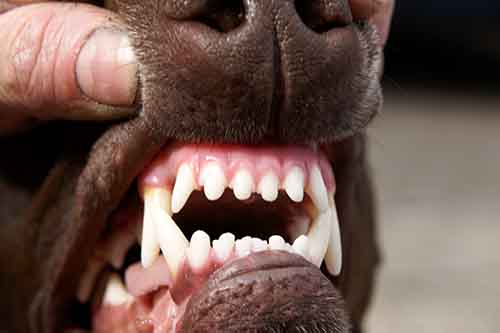
3 – 5 years: Teeth may show some yellowing or tartar build up. Front incisors will have partially smooth edges. You might see some signs of ‘wear and tear’.
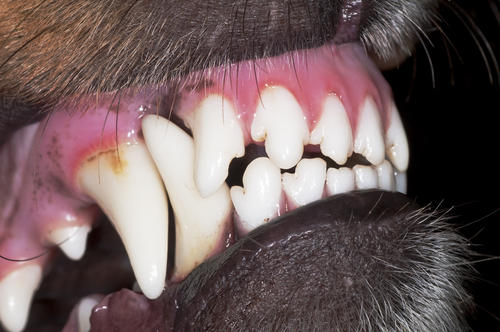
5 – 8 years: All teeth are likely to show yellow/brown tartar build up. Gums may also show color changes near the tooth-line. Incisors may be smooth and worn at the edges.
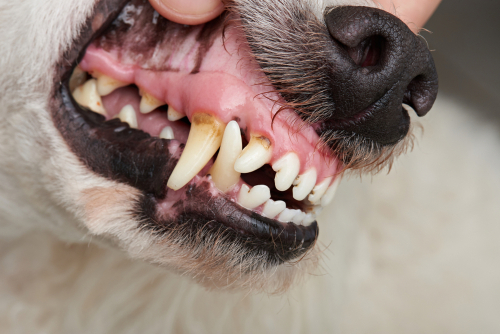
8 years + : Teeth will clearly show that they’ve been in use for many years. Moderate to heavy tartar build up. Gums may be pink or inflamed. Broken or rotten teeth are possible.
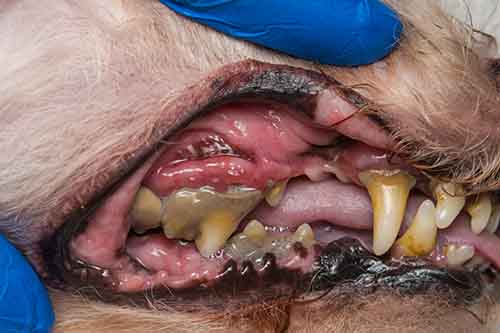
Obviously this isn’t an exact-science! The condition of any dog’s teeth can vary enormously, even in dogs of the same age. Previous dental care, diet, overall health and breed-specific traits can make a big difference from dog to dog. Use the above as guidelines only.
2. Eyes: age-related cataracts usually don’t show up until a dog is about 7 years old.
Puppies have the clearest eyes.. they’re so innocent and trusting. Older dogs have the same loving and trusting gaze, but their eyes are often not as clear. As dogs age their eyes often become cloudy and maybe a little dull. Sometimes a blue-ish haziness appears which is normal in older dogs. Cataracts can give a very white, obviously ‘milky’ look to the eye.
Although a dog could develop cataracts or eye damage the mimics this ‘look’ at any age (due to injury, poor diet, infection etc.) age-related cataracts usually don’t show up until a dog is about 7 years old.
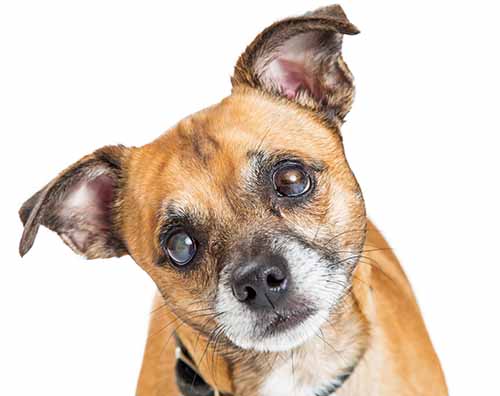
Some breeds have a tendency to develop them a little earlier.
3. Coat Color
Going gray happens to us all at some point… including our pets. But also, just like people, some dogs go gray earlier than others. Bloodlines (ie genetics) and breed type can be factors, as can things like diet, stress and overall health.
Usually gray hairs start to show up around your dog’s muzzle and under his chin first. Then they spread across his chest, neck, ears, legs and feet. Eventually you may even see some on his torso.
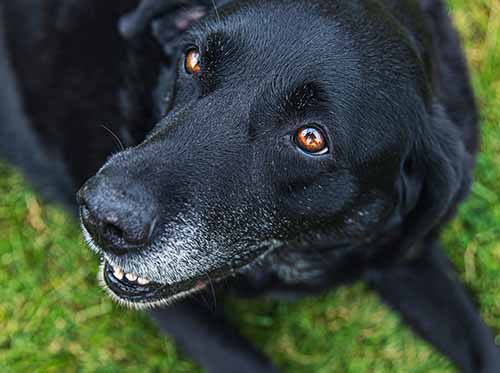
Obviously there are lots of other changes that can give clues as to how old a dog is, but the ones above are the most reliable.
4. Other Factors to Estimate Your Dog’s Age
Some other things you might notice in senior dogs include:
- Loss of muscle tone
- Low tolerance for exercise
- Poor bladder control
- Lumps & bumps (fatty lumps called lipomas are fairly common and not dangerous)
- Disruptive sleep patterns
Plus many more old dog behavior traits.
Authors
Disclaimer: This website's content is not a substitute for veterinary care. Always consult with your veterinarian for healthcare decisions. Read More.